226

Barbro Nilsson 1899–1983

Salerno flatweave carpet

Märta Måås-Fjetterström AB
Sweden, 1948
hand-woven wool
93 w × 126 l in (236 × 320 cm)
estimate: $20,000–30,000

Woven signature to edge 'AB MMF BN'.
provenance: Private Collection | Wright, Scandinavian Design, 9 May 2019, Lot 114 | Collection of Reed and Delphine Krakoff
literature: Märta Måås-Fjetterström: Märta flyger igen! 90 år med Märta Måås-Fjetterström, exhibition catalog, pg. 151

print

Texture, Hue & Pattern

By Jeffrey Head

During her tenure as the Creative Director of Märta Måås-Fjetterström AB, from 1942 to 1970, Barbro Nilsson developed an exceptional use of color in combination with dozens of original patterns. As a designer and weaver, her command of the textile arts was technical, hands-on, and aesthetic. While Nilsson’s use of Rölakan, a traditional Swedish weaving method, was well established at the studio, she advanced the technique, setting precedence for what was possible. Rölakan, also known as a flat weave—interlocking method, lent itself to geometrical forms with inlays. Nilsson made special use of the weave’s slits and diagonals, creating more of a relationship between color, shape and form. This is most immediately visible with the background and foreground of her textile designs. The effect becomes an almost three-dimensional illusion, with multiple planes of depth, although diagramed and then constructed in a flat, two-dimensional layout. The detail and finesse is more suggestive of needle work than a large hand-operated weaving loom.

Nilsson’s color palette was both vibrant and subtle. New and artful color combinations appeared, further enhancing a pattern’s visual texture. To achieve such results, multiple colors of wool yarn, at times nearly imperceptible, were often blended into one. This reinforced Nilsson’s imaginative compositions and themes which were most often tied to nature. Whether the subjects of her pattern were flowers, blueberries, seashells, or seaweed the effect she produced was an aesthetic comfort, with a calming, rhythmic repetition. Nilsson’s expressive designs help define the interior space in which they are placed and also provide connection to the outdoors.

Whether the subjects of her pattern were flowers, blueberries, seashells, or seaweed the effect she produced was an aesthetic comfort, with a calming, rhythmic repetition. Nilsson’s expressive designs help define the interior space in which they are placed and also provide connection to the outdoors.

The origin of the Salerno pattern is unusual because it commemorates a historical event, albeit in a stylized, highly interpretative way. In 1947 a plane accident involving the Swedish Air Force occurred near Salerno, Italy. Inspired by the international event, Nilsson created the design which was presented to the Archbishop for the Salerno Chapel, in gratitude for the care given to the Swedish crew. The pattern is generally considered to be an abstract, symbolic representation of an aircraft. Another perspective, given Nilsson’s affinity toward nature, is seeing the pattern as a coastline with small color accents representing boats or sparkles of water. Especially since the Salerno pattern was first done in blue. The Salerno pattern was also available in brown, grey, and red.

Early examples of the Salerno carpet were commissioned by: The Scandinavian Bank (Malmo), The Swedish American Line (Gothenburg), The Swedish Embassy in Brussels, Belgium and clothing manufacturer Hj. Söderberg (Uppsala). The design was also scaled for residential use shortly after its introduction in 1948. A number of variations evolved from Nilsson’s original pattern, further highlighting the dynamic adaptability of the pattern’s intricacies while ensuring its beauty.

A Legacy of Innovation
& Excellence in Textile Design

By Martin Chard, International Executive at Märta Måås-Fjetterström

Solid, simple and beautiful. In an essay from 1905, Märta Måås-Fjetterström (1873–1941) defined her ambitions for Swedish handicrafts while heading the Malmö Handicraft Association; living and working in a time of great change, with an ambivalence between the possibilities of modernity and mass production and a fear for a loss of identity and traditional knowledge, she had a vision for new designs rooted in the rich heritage of Swedish folklore but combined with contemporary and new influences. Her ideas did not find fertile ground at the Malmö Handicraft Association, an association mainly interested in reproducing old designs, and Måås-Fjetterström was subsequently let go. A great blow to Måås-Fjetterström at the time, but it would later prove to be a stroke of luck.

Sweden has a long and rich textile heritage, produced domestically by women. At the turn of the 19th century, several initiatives were made to formalize and preserve local knowledge and traditions. Lilli Zickerman (1858–1949), initiator of the National Association of Swedish Handicraft Societies, had an ambitious plan. Together with her brother, she photographed and hand-colored almost 24,000 Swedish textiles, immortalizing a great archive of rural pieces. Zickerman, striving to strengthen a national textile heritage, wanted to create an alternative to the imported Persian rugs favored in aristocratic homes. She saw potential in Märta Måås-Fjetterström, the art teacher and illustrator who had been fired from the local handicraft association, and encouraged her to continue to work with textiles. Zickerman made a weaving school and a workshop with skilled weavers available to Måås-Fjetterström who started creating designs for carpets and tapestries. Persian rugs were an obvious influence, but the motifs and colors distinctly her own. 

“She is a remarkable storyteller, (...) who finds her inspiration in legends and meadows, in the Orient and the North, in ancient beliefs and fresh green leaves, in the Bible and buildings, in everything that causes the imagination to bloom…” explains Erik Wettergren

In 1919, Märta Måås-Fjetterström finally set up her own studio in Båstad, Sweden. Employing young, skilled weavers she expanded and established herself as a leading name in handwoven pieces. It was not always easy; the interwar period saw strict limitations on the access to quality materials, a “luxury tax” was applied to pieces from the studio and it was a constant struggle to combine the demands of business with the longing for more time as an artist. Nonetheless, an industrious and strong-willed woman, Måås-Fjetterström and her designs frequently traveled around Europe and the United States. She exhibited with great success in London, Paris, Brussels, Milan, New York and Chicago, amongst other places. 

Måås-Fjetterström had the idea that her designs should be repeatedly executed. She likened herself with a composer and the weavers with the musicians. Just as a piece of music should be good enough to be played over and over, so should the designs of a carpet. And although there are very detailed instructions for each design, each piece varies slightly depending on the weaver, just as a piece of music varies with the musician. 

Måås-Fjetterström's designs continuously changed with time and inspiration came from myriad sources. “She is a remarkable storyteller, (...) who finds her inspiration in legends and meadows, in the Orient and the North, in ancient beliefs and fresh green leaves, in the Bible and buildings, in everything that causes the imagination to bloom…” explains Erik Wettergren, curator and then later the director of Nationalmuseum. Inspired by 1930s modernistic and functionalistic architecture, Måås-Fjetterström created several designs in which line and shape come together in a refined way, using very few colors. In other works she uses a multitude of hues to capture scenes inspired by nature. 

Måås-Fjetterström's studio had a large window facing the sea; yet maritime motifs are one of few things rarely found in her designs. In contrast, Barbro Nilsson (1899-1983) — who took over the artistic leadership of the studio after Märta Måås Fjetterström's death in 1941 ­— loved the sea. Many of her much cherished designs have names evoking their inspiration, e.g. Shells, Seaweed, and Sole. To allow for softer shapes in flatweave carpets, Nilsson invented a specialized woven technique. Today, our artisan weavers still use her unique, tapestry-inspired weave. 

Barbro Nilsson's designs for the Märta Måås-Fjetterström Workshop were suitable for variations in size and color. Also a professor at Konstfack, Stockholm (University College of Arts, Crafts and Design), she found and connected young talents, notably Marianne Richter (1916–2010) and Ann-Mari Forsberg (1916–1992) to the studio, introducing completely new aesthetics radically different from earlier pieces. Parallel with the continued weaving of Måås-Fjetterström's by then classic designs, many new and prestigious works were made for public institutions and corporations. The largest piece ever made was commissioned for the United Nations building in New York, delivered in 1952. Ten weavers worked more than a full year completing the almost 2,200 square foot wall hanging, which at the time was the largest known tapestry in the world.

Women of the Workshop

Historical Images

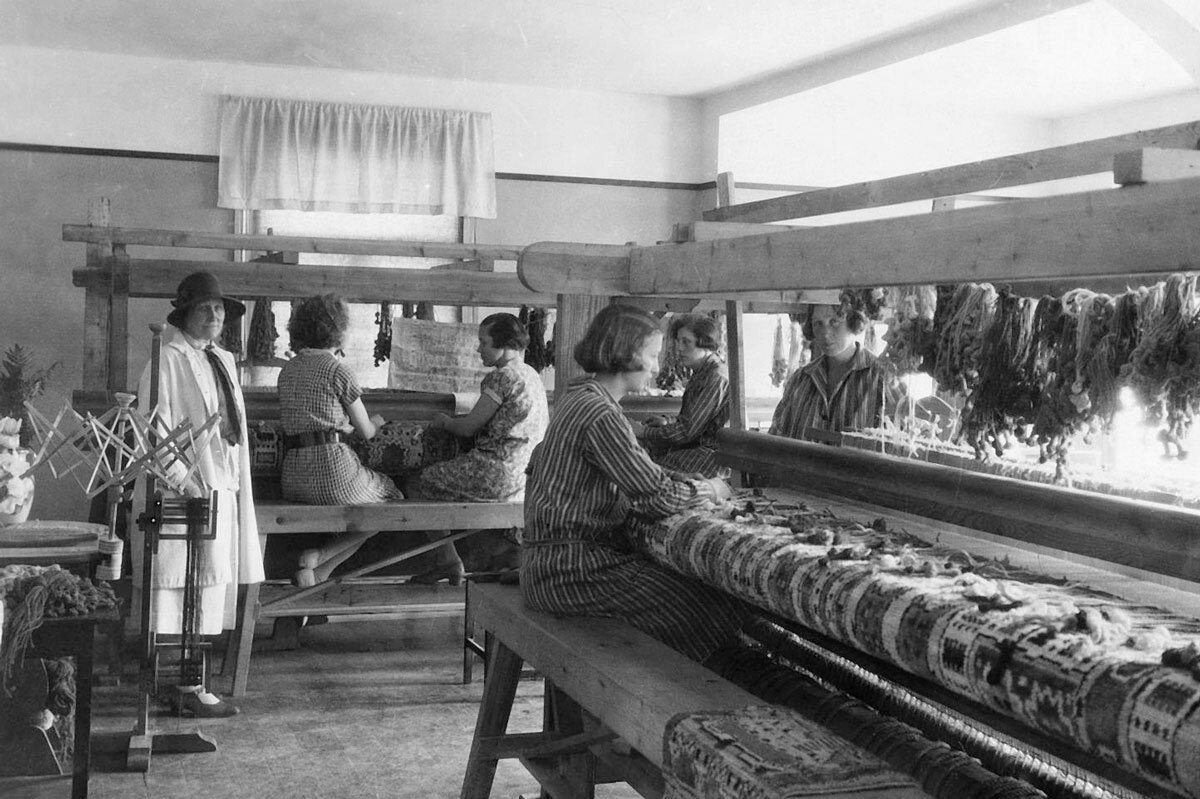
Märta Måås-Fjetterström standing amongst the weavers and the looms of the workshop in 1923.

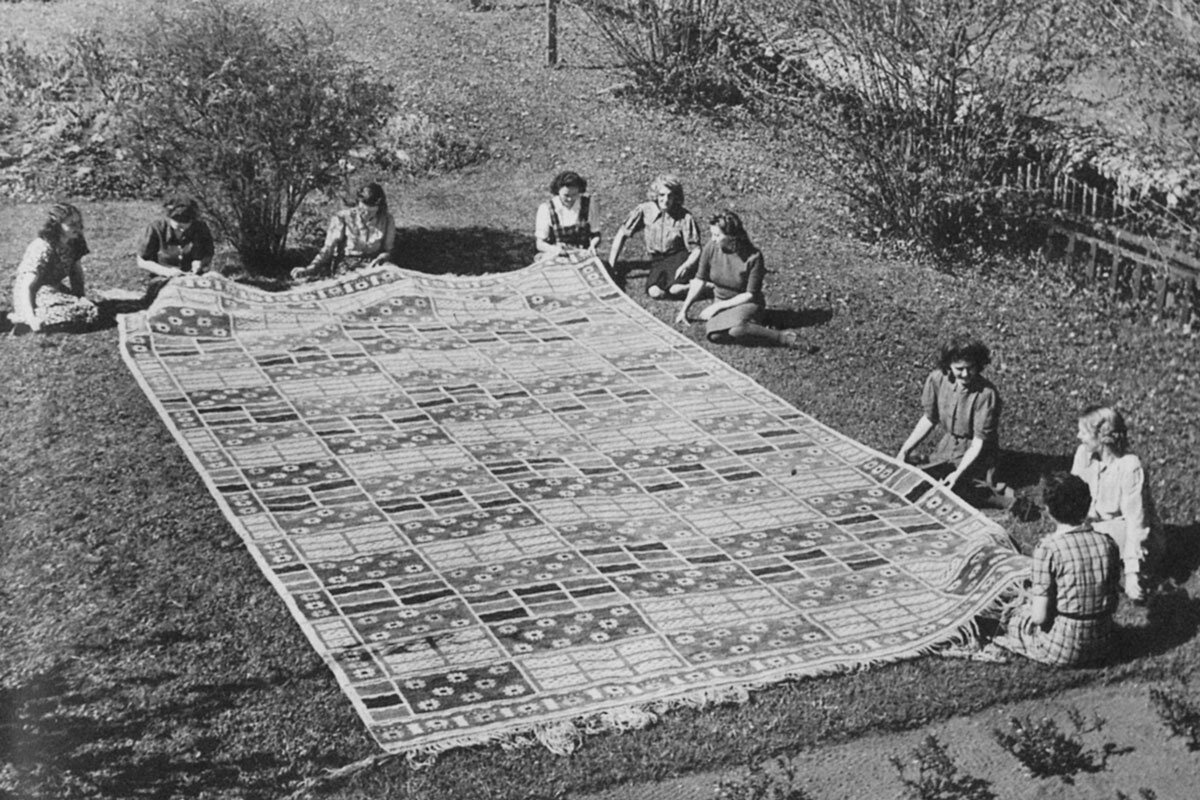
Outside the workshop in Båstad, weavers are finishing an Ängarna carpet designed by Märta Måås-Fjetterström for the Swedish Legation in Buenos Aires.

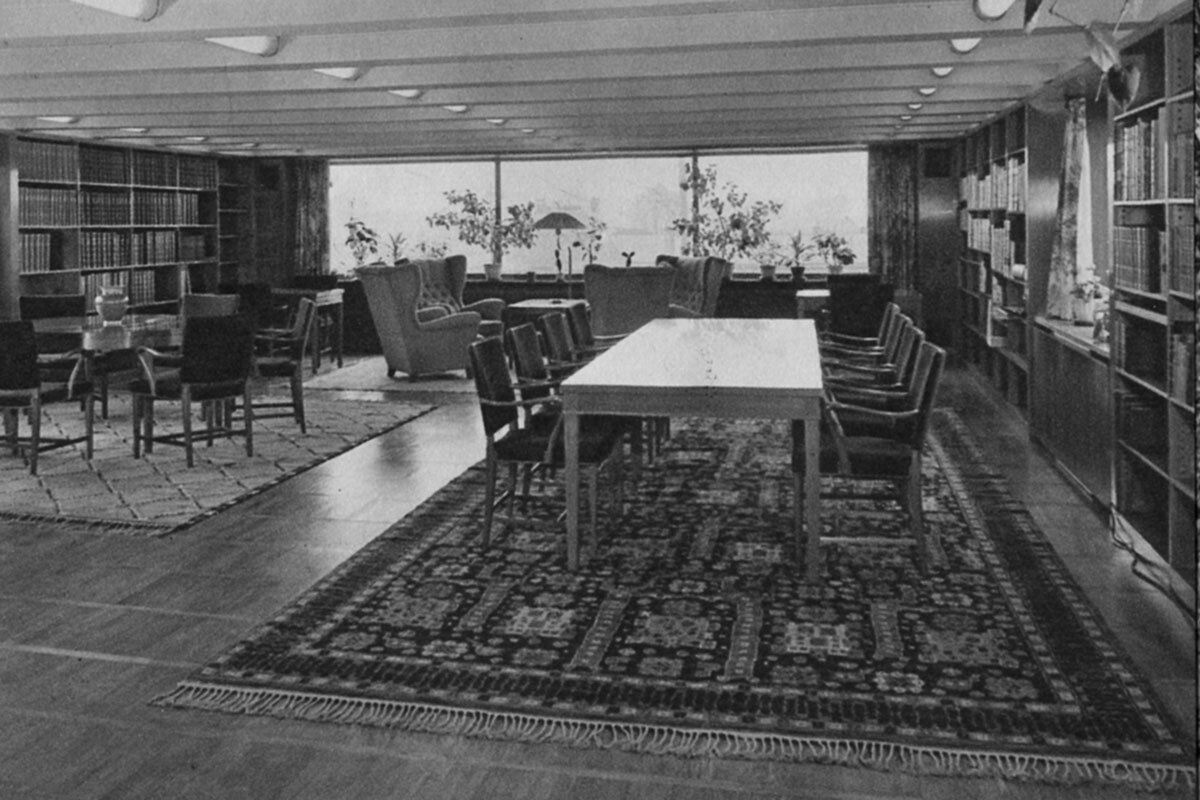
A Trävdgårdsmattan carpet designed by Märta Måås-Fjetterström and a Guldklimpen carpet designed by Barbro Nilsson at the Esselte Ab, Stockholm.

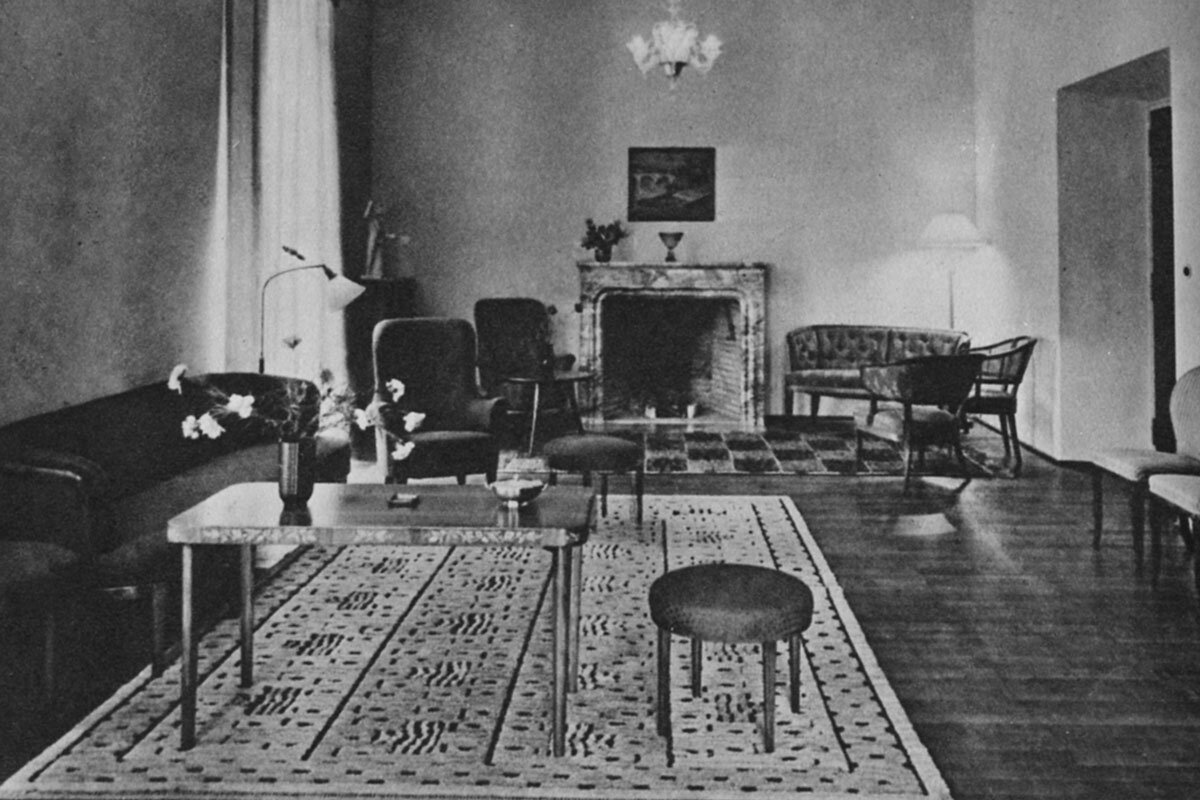
A Skvattram carpet designed by Märta Måås-Fjetterström at the Swedish Institute, Rome.

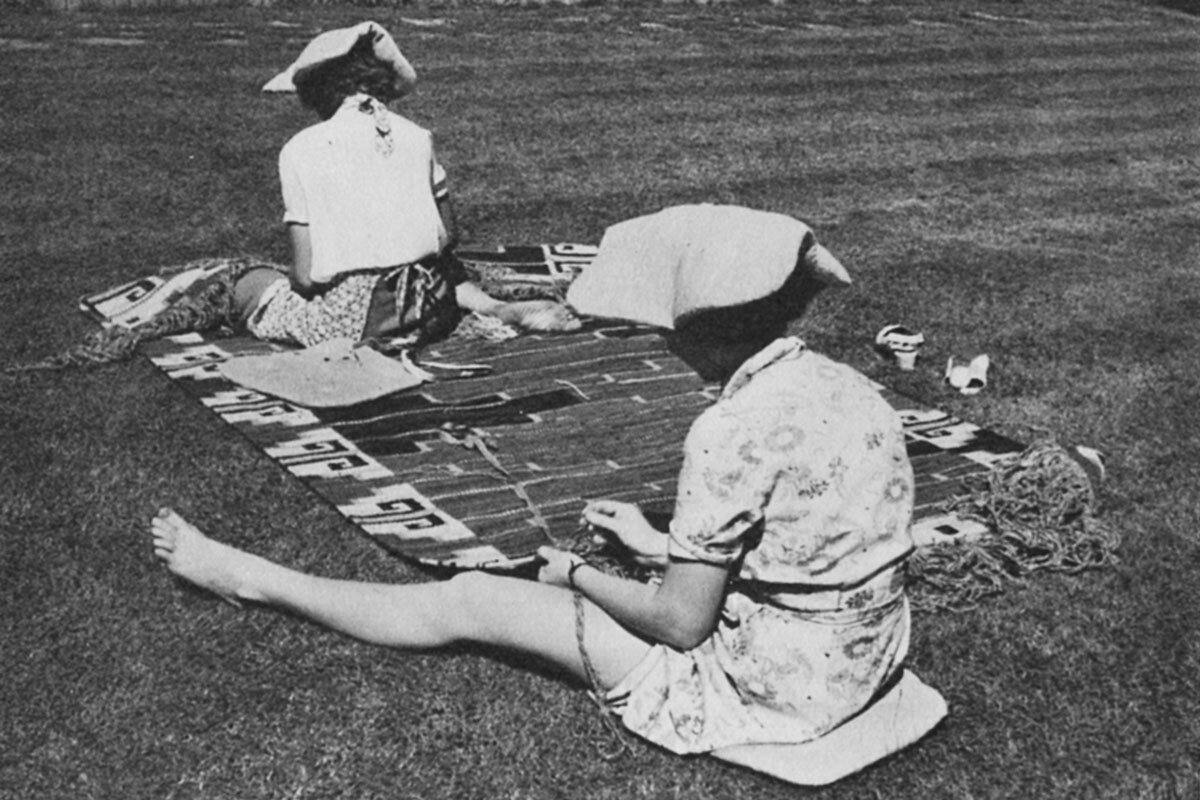
Weavers working outdoors as they complete the fringe of a Bruna Heden carpet designed by Märta Måås-Fjetterström.

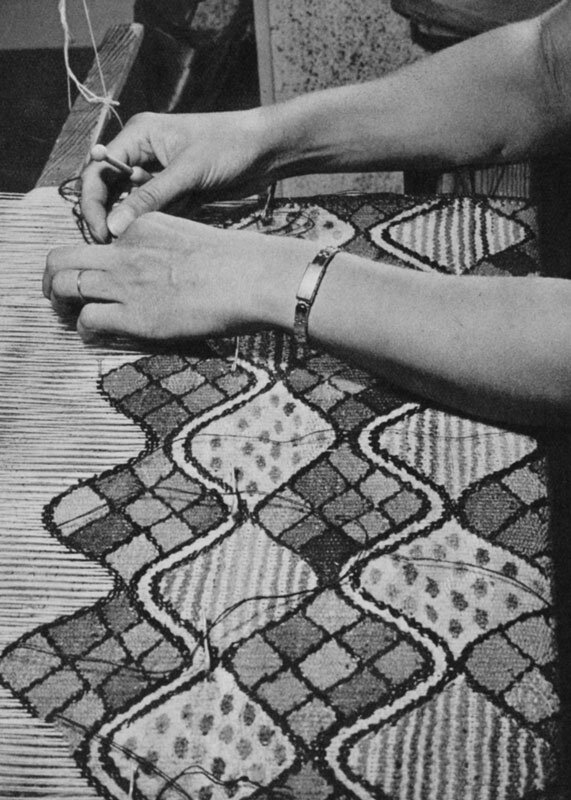
Weaving Vägen till Rom (Road to Rome), a carpet designed by Barbro Nilsson.

Barbro Nilsson 1899–1983

Barbro Nilsson was born in 1899 in Malmö, Sweden and was a skilled, passionate and intuitive weaver, creating works deeply rooted in the folk traditions of Sweden that were also radical in their sheer exuberance and technical feat. The daughter of Swedish architect and designer Erik Lundberg, she went studied at the Brunssons Vävskola and Tekniska School in Stockholm (now known as Konstfackskolan). From 1934 to 1947, Nilsson taught at Konstfackskolan, Stockholm (University of College of Arts, Crafts, and Design) and later served as the head of the school’s textile department.

In 1942, Nilsson became the artistic director and chief designer at the Märta Måås-Fjetterström workshop where she continued the studio's tradition of high quality craftsmanship and creative fervor. She created many flatweave, pile and tapestry-woven carpets for Märta Måås-Fjetterström. Her designs often feature nature-inspired patterns with an emphasis on color, the subtle variations in hue enlivening her works. Barbro Nilsson died in 1983 and her textile designs continue to be highly coveted by decorative art collectors.

Learn More

Auction Results Barbro Nilsson