124

Märta Måås-Fjetterström 1873–1941

Nyponblomman flatweave carpet

Märta Måås-Fjetterström AB
Sweden, 1932 / c. 1950
hand-woven wool
6' × 10'2" in (183 × 310 cm)
estimate: $6,000–8,000

This design was inspired by wild dog roses (Nyponblomman) that grew along the beach near Måås-Fjetterström's home.
Woven signature to corner 'MMF AB'.

print

A Legacy of Innovation
& Excellence in Textile Design

By Martin Chard, International Executive at Märta Måås-Fjetterström

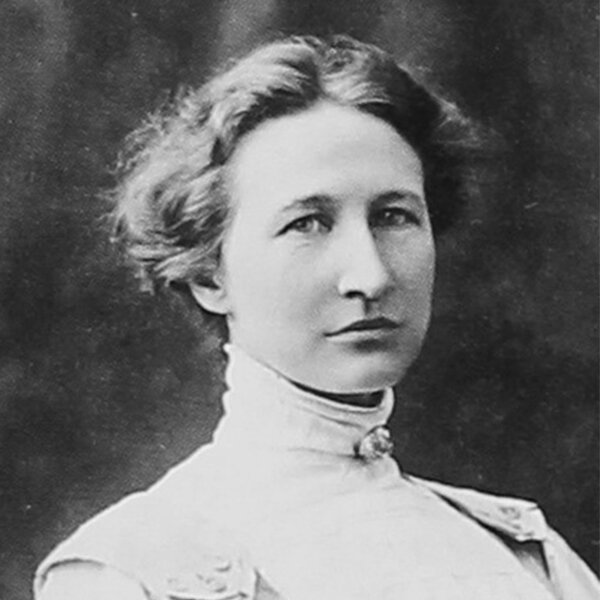
Solid, simple and beautiful. In an essay from 1905, Märta Måås-Fjetterström (1873–1941) defined her ambitions for Swedish handicrafts while heading the Malmö Handicraft Association; living and working in a time of great change, with an ambivalence between the possibilities of modernity and mass production and a fear for a loss of identity and traditional knowledge, she had a vision for new designs rooted in the rich heritage of Swedish folklore but combined with contemporary and new influences. Her ideas did not find fertile ground at the Malmö Handicraft Association, an association mainly interested in reproducing old designs, and Måås-Fjetterström was subsequently let go. A great blow to Måås-Fjetterström at the time, but it would later prove to be a stroke of luck.

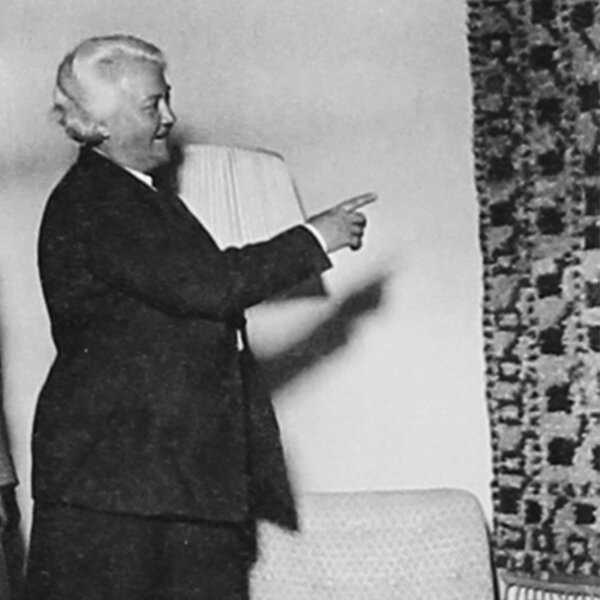
Sweden has a long and rich textile heritage, produced domestically by women. At the turn of the 19th century, several initiatives were made to formalize and preserve local knowledge and traditions. Lilli Zickerman (1858–1949), initiator of the National Association of Swedish Handicraft Societies, had an ambitious plan. Together with her brother, she photographed and hand-colored almost 24,000 Swedish textiles, immortalizing a great archive of rural pieces. Zickerman, striving to strengthen a national textile heritage, wanted to create an alternative to the imported Persian rugs favored in aristocratic homes. She saw potential in Märta Måås-Fjetterström, the art teacher and illustrator who had been fired from the local handicraft association, and encouraged her to continue to work with textiles. Zickerman made a weaving school and a workshop with skilled weavers available to Måås-Fjetterström who started creating designs for carpets and tapestries. Persian rugs were an obvious influence, but the motifs and colors distinctly her own. 

“She is a remarkable storyteller, (...) who finds her inspiration in legends and meadows, in the Orient and the North, in ancient beliefs and fresh green leaves, in the Bible and buildings, in everything that causes the imagination to bloom…” explains Erik Wettergren

In 1919, Märta Måås-Fjetterström finally set up her own studio in Båstad, Sweden. Employing young, skilled weavers she expanded and established herself as a leading name in handwoven pieces. It was not always easy; the interwar period saw strict limitations on the access to quality materials, a “luxury tax” was applied to pieces from the studio and it was a constant struggle to combine the demands of business with the longing for more time as an artist. Nonetheless, an industrious and strong-willed woman, Måås-Fjetterström and her designs frequently traveled around Europe and the United States. She exhibited with great success in London, Paris, Brussels, Milan, New York and Chicago, amongst other places. 

Måås-Fjetterström had the idea that her designs should be repeatedly executed. She likened herself with a composer and the weavers with the musicians. Just as a piece of music should be good enough to be played over and over, so should the designs of a carpet. And although there are very detailed instructions for each design, each piece varies slightly depending on the weaver, just as a piece of music varies with the musician. 

Måås-Fjetterström's designs continuously changed with time and inspiration came from myriad sources. “She is a remarkable storyteller, (...) who finds her inspiration in legends and meadows, in the Orient and the North, in ancient beliefs and fresh green leaves, in the Bible and buildings, in everything that causes the imagination to bloom…” explains Erik Wettergren, curator and then later the director of Nationalmuseum. Inspired by 1930s modernistic and functionalistic architecture, Måås-Fjetterström created several designs in which line and shape come together in a refined way, using very few colors. In other works she uses a multitude of hues to capture scenes inspired by nature. 

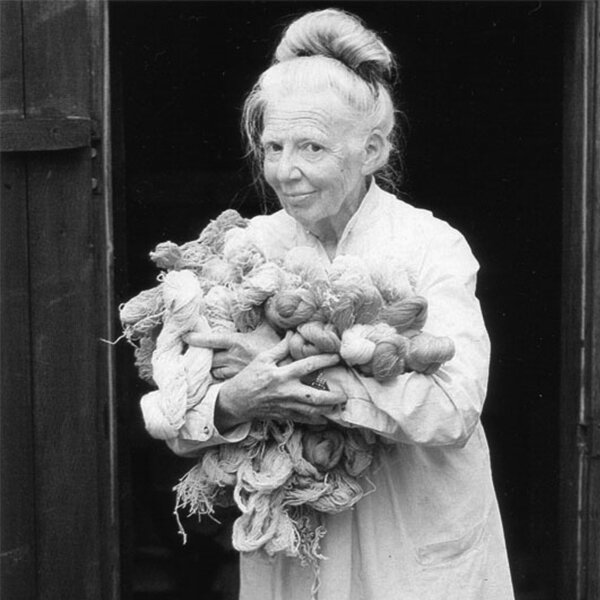
Måås-Fjetterström's studio had a large window facing the sea; yet maritime motifs are one of few things rarely found in her designs. In contrast, Barbro Nilsson (1899-1983) — who took over the artistic leadership of the studio after Märta Måås Fjetterström's death in 1941 ­— loved the sea. Many of her much cherished designs have names evoking their inspiration, e.g. Shells, Seaweed, and Sole. To allow for softer shapes in flatweave carpets, Nilsson invented a specialized woven technique. Today, our artisan weavers still use her unique, tapestry-inspired weave. 

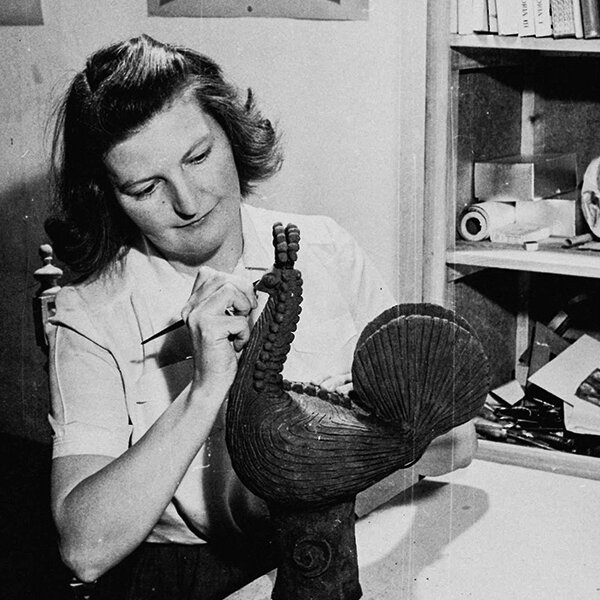
Barbro Nilsson's designs for the Märta Måås-Fjetterström Workshop were suitable for variations in size and color. Also a professor at Konstfack, Stockholm (University College of Arts, Crafts and Design), she found and connected young talents, notably Marianne Richter (1916–2010) and Ann-Mari Forsberg (1916–1992) to the studio, introducing completely new aesthetics radically different from earlier pieces. Parallel with the continued weaving of Måås-Fjetterström's by then classic designs, many new and prestigious works were made for public institutions and corporations. The largest piece ever made was commissioned for the United Nations building in New York, delivered in 1952. Ten weavers worked more than a full year completing the almost 2,200 square foot wall hanging, which at the time was the largest known tapestry in the world.

Women of the Workshop

Historical Images

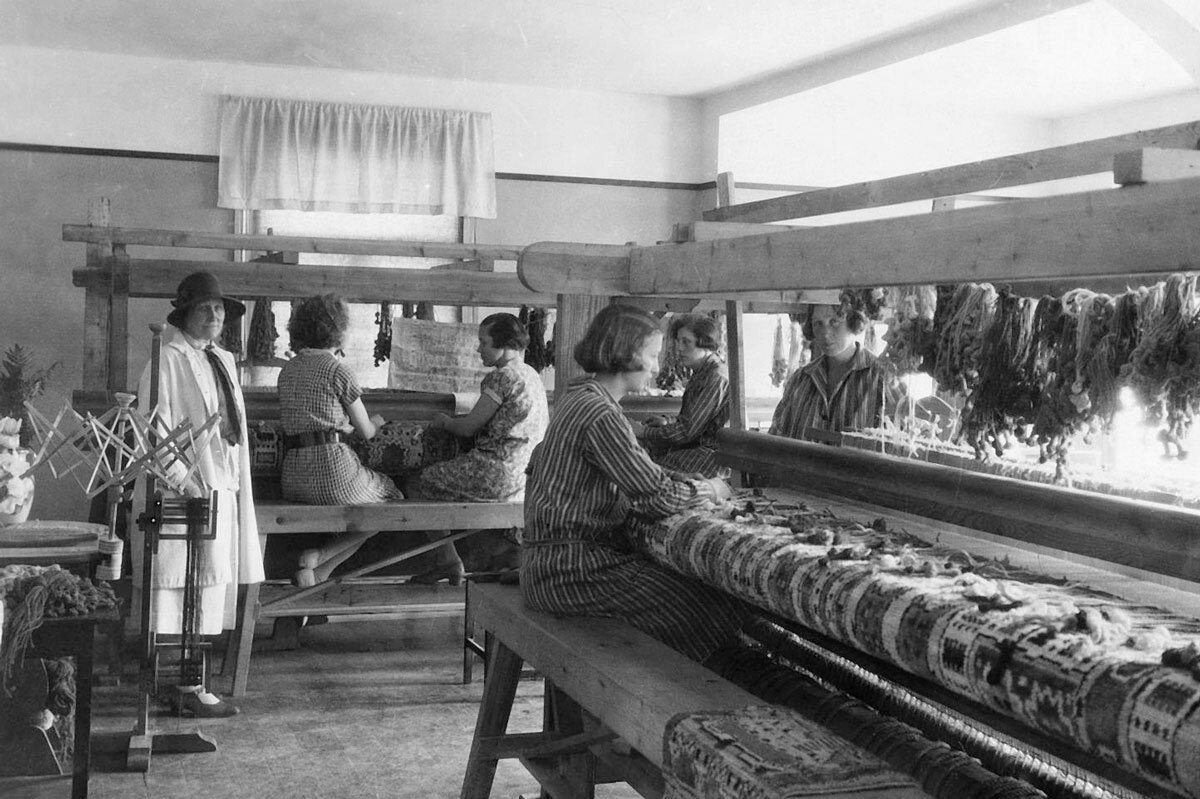
Märta Måås-Fjetterström standing amongst the weavers and the looms of the workshop in 1923.

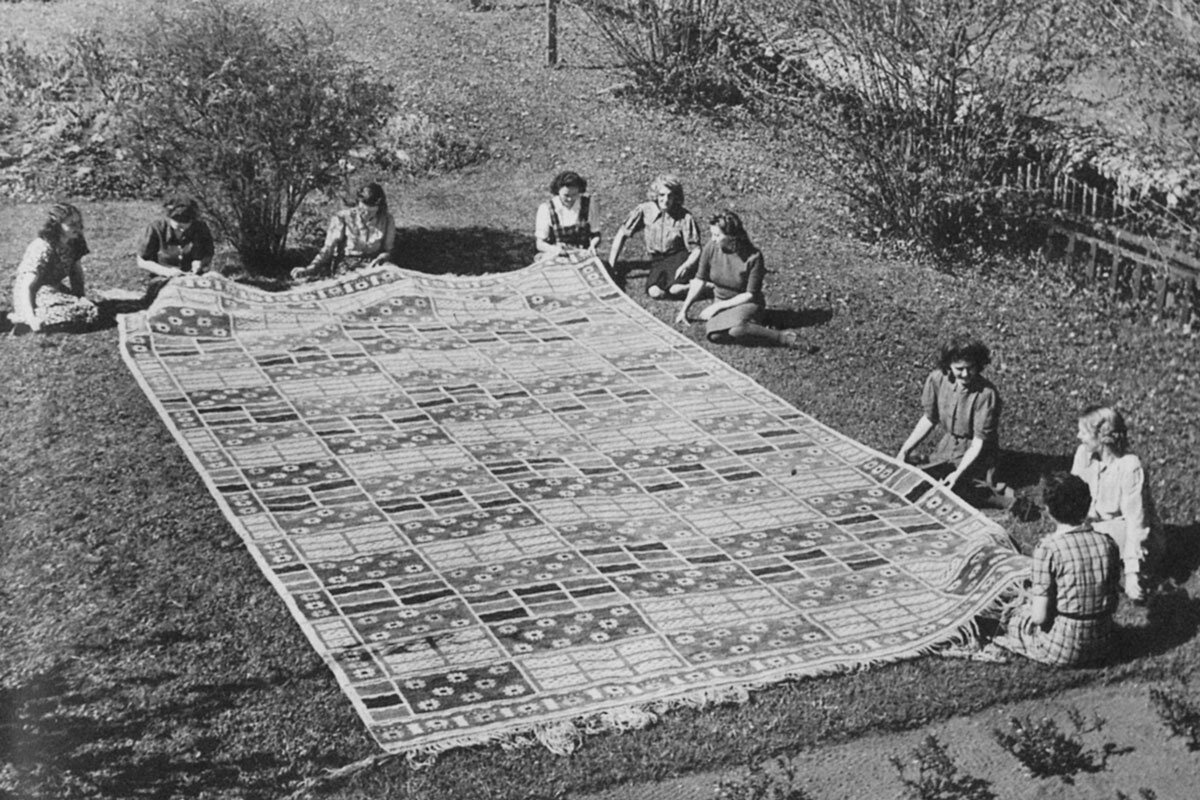
Outside the workshop in Båstad, weavers are finishing an Ängarna carpet designed by Märta Måås-Fjetterström for the Swedish Legation in Buenos Aires.

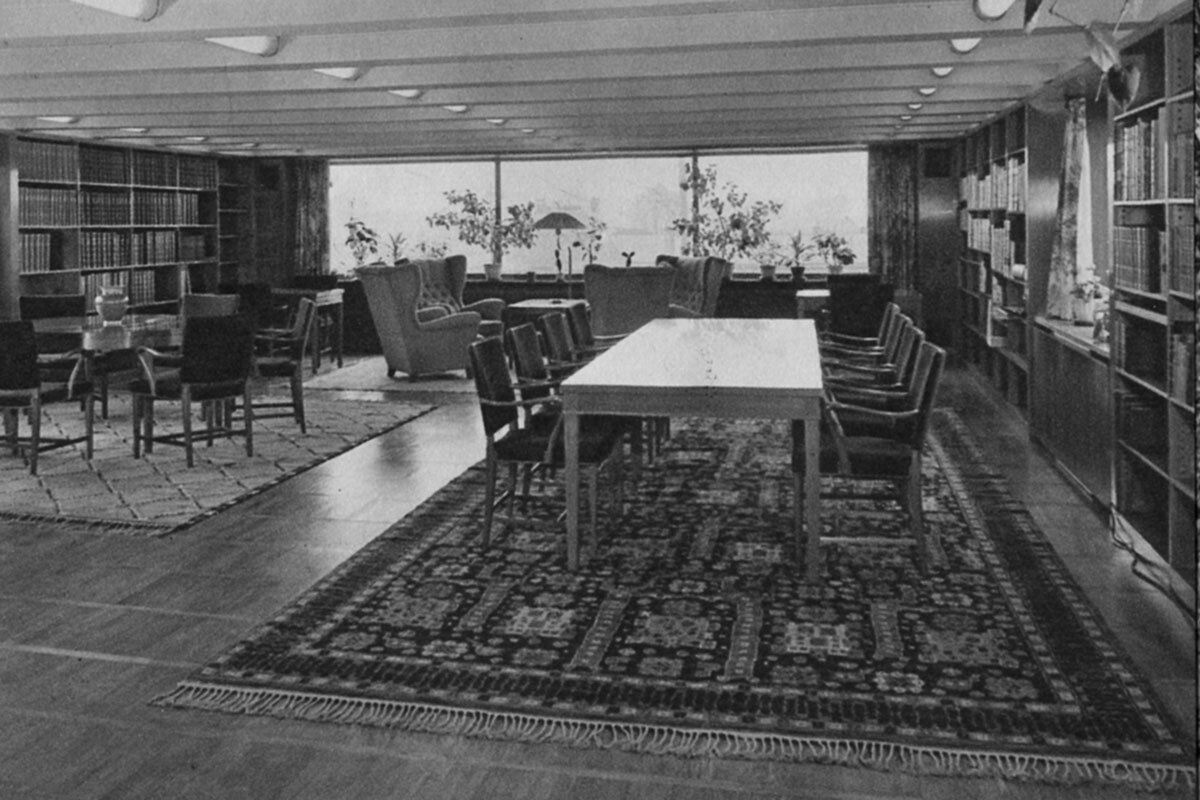
A Trävdgårdsmattan carpet designed by Märta Måås-Fjetterström and a Guldklimpen carpet designed by Barbro Nilsson at the Esselte Ab, Stockholm.

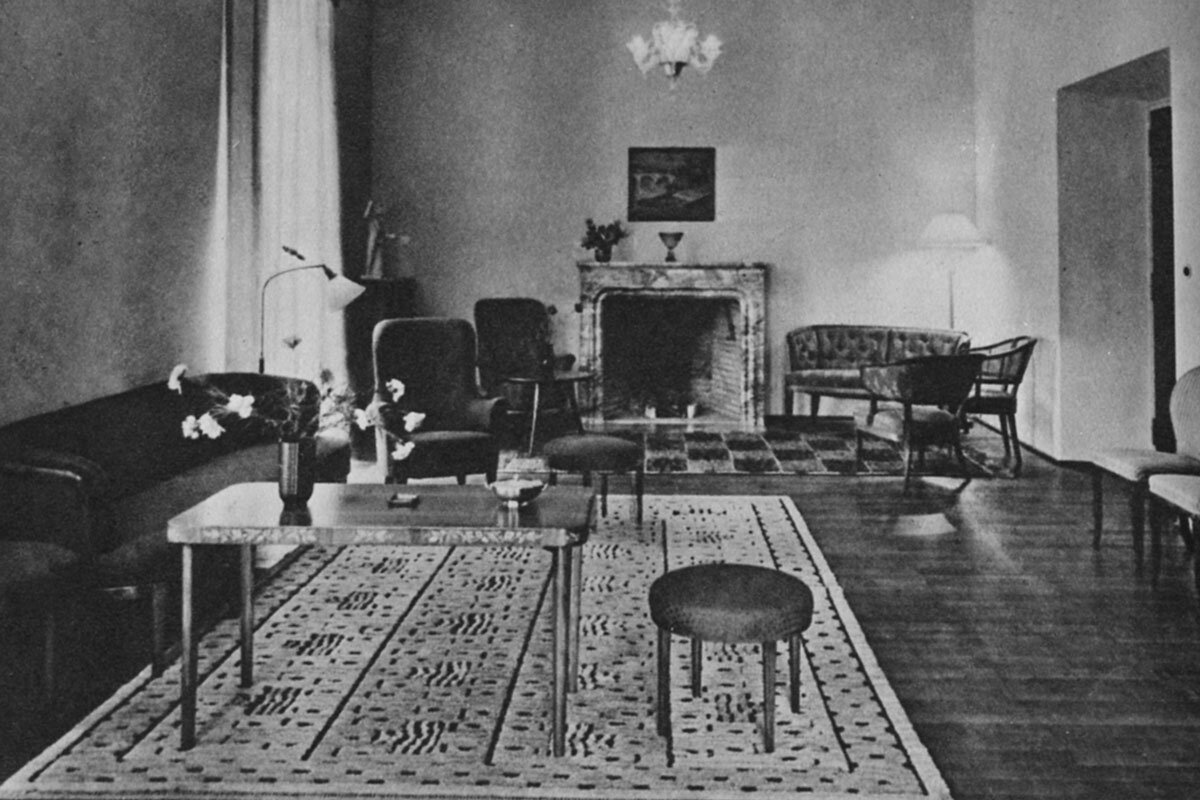
A Skvattram carpet designed by Märta Måås-Fjetterström at the Swedish Institute, Rome.

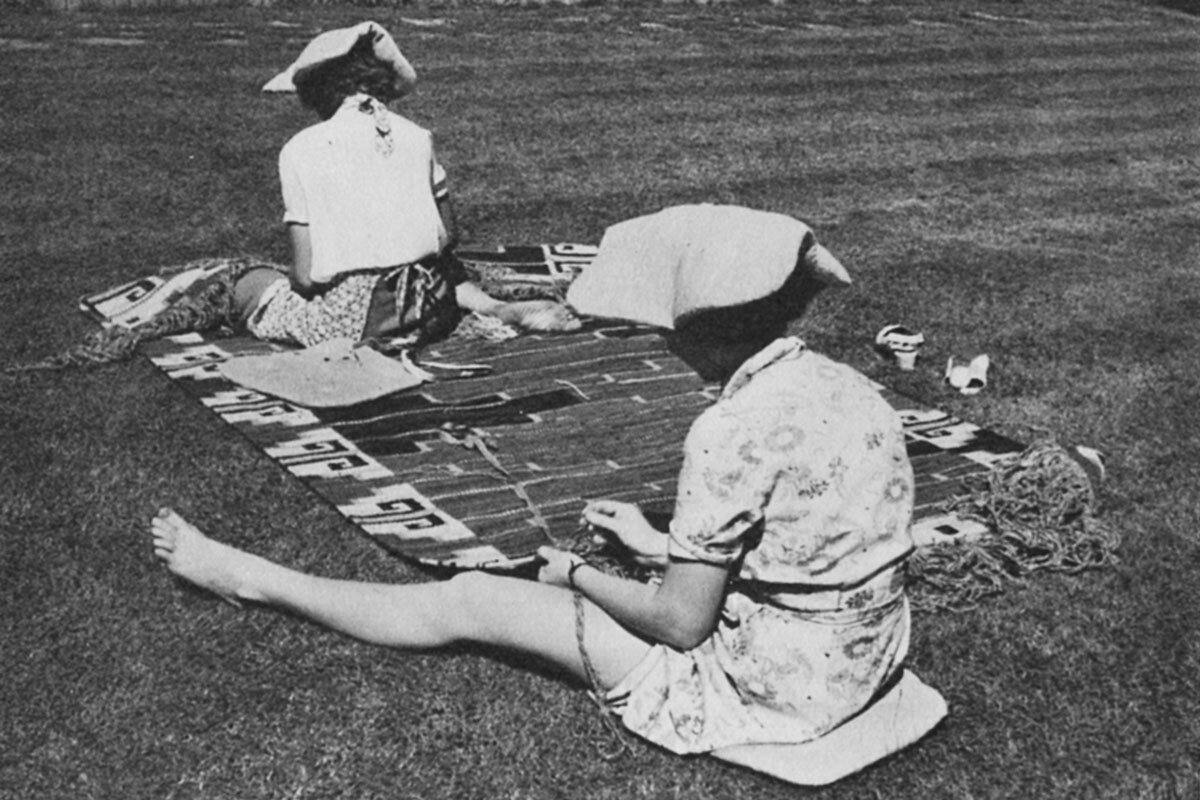
Weavers working outdoors as they complete the fringe of a Bruna Heden carpet designed by Märta Måås-Fjetterström.

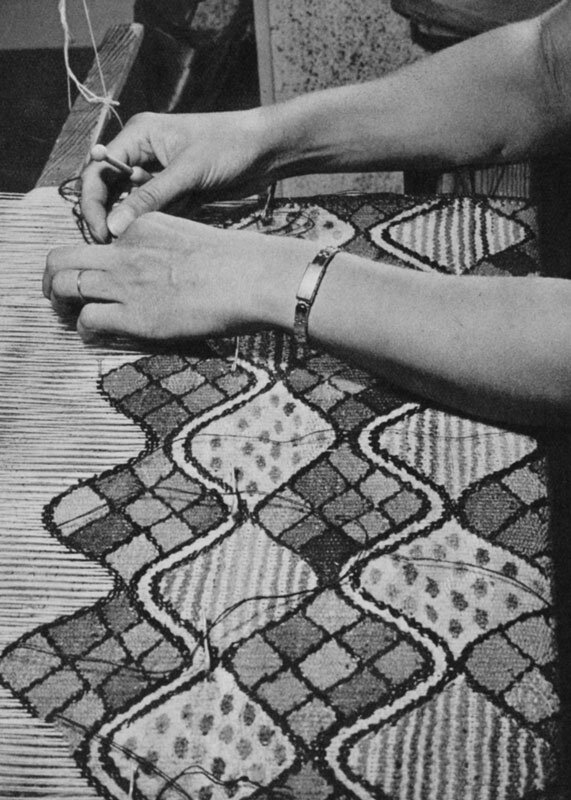
Weaving Vägen till Rom (Road to Rome), a carpet designed by Barbro Nilsson.

Nader Bolour is the man behind the remarkable offerings in this sale. Bolour’s destiny was wrapped in the luxurious world of carpets. He grew up around them, his grandfather establishing Rahim Bolour & Son Carpets in Iran before the family relocated to London in 1979 where, as a boy, Bolour worked in his father’s warehouse sweeping and cleaning carpets. In 1998, just three years after establishing his presence in New York, Bolour acquired the venerable gallery Doris Leslie Blau. 

The Doris Leslie Blau gallery was founded in 1965 by Doris Blau, who became a legend in the world of design for her outstanding collection of avant-garde and antique carpets from around the globe. Blau likened carpets to sculpture appreciating their tactile and sensual nature, inviting clients into a homey gallery where they could take their time in selecting the perfect carpet for their homes. 

With a keen eye and wealth of knowledge, Bolour continues in the footsteps of his renowned predecessor, offering exceptional carpets as well as creating bespoke rugs that are certain to become the classics of tomorrow. 

Märta Måås-Fjetterström 1873–1941

For nearly a century the Märta Måås-Fjetterström workshop has been producing carpets, textiles and weavings of the highest quality and craftsmanship. The company was formed in 1919 by Märta Måås-Fjetterström, an innovative and influential artist who revived declining weaving techniques and introduced the exploration of texture in her carpet designs. During her lifetime, Måås-Fjetterström created more the 700 original patterns blending folk and traditional handicrafts with Art Nouveau and Art Deco styles.

When Måås-Fjetterström passed away in 1941, the renowned textile artist Barbro Nilsson became the workshop’s director. Nilsson, along with Ann-Mari Forsberg, Marianne Richter, Kaisa Melanton and other designers, continued in Märta Måås-Fjetterström’s footsteps creating innovative and colorful hand-woven masterpieces.

Learn More

Auction Results Märta Måås-Fjetterström